Shopify Theme
Development
Your theme is the layer between your brand and every customer who visits your store. Shopify theme development covers everything from building a fully custom theme around a specific design to making targeted changes within a theme you already have. CodeVibez handles both, along with the ongoing Liquid and Online Store 2.0 work most stores eventually need as they grow.

Why Choose CodeVibez for Shopify Theme Development?

Why Choose CodeVibez for Shopify Theme Development?

Customization or Custom Build, Whichever Actually Fits
Not every project needs a theme built from scratch. We assess whether your requirement is better served by customizing your existing theme or building something new, rather than defaulting to the larger, more expensive option.
Built on Shopify's Current Theme Architecture
Our developers work with Online Store 2.0, JSON templates, sections, and blocks, the current standard for Shopify themes, rather than older, more rigid theme structures.
Design Fidelity Without False Promises
Whether you're starting from a Figma file or an existing brand identity, we build to match it as closely as Shopify's theme framework allows, and we'll tell you upfront where an exact match isn't practical.
Ongoing Support Through Development Hours
Theme work rarely ends at launch. Further adjustments, new sections, and fixes are available through Shopify development hours rather than a new project scope every time.

Custom Theme Development vs. Theme Customization

These are often confused, and picking the wrong one wastes time and budget:
Theme customization
Works within your existing theme, adjusting layout, colors, typography, sections, and specific page elements without rebuilding the underlying structure.
Custom theme development
Builds a theme from the ground up, structured specifically around your brand, product catalog, and storefront requirements, used when an existing theme's architecture can't reasonably support what you need.

What We Build and Customize

Custom Shopify Theme Development
A theme built from scratch around your brand and store requirements, including custom page layouts, reusable theme components, and a structure planned specifically for your catalog rather than adapted from a generic starting point.
Shopify Theme Customization
Layout changes, typography, colors, spacing, navigation adjustments, and modifications to homepage, product, and collection page elements within your current theme.
Custom Sections and Blocks
Homepage sections, promotional banners, feature cards, testimonial sections, and other merchant-editable content blocks built so your team can update content through the Shopify theme editor without needing a developer for every change.
Product and Collection Page Development
Custom product page layouts, variant selection interfaces, product media presentation, and collection page customization, including filtering interfaces adapted to your catalog structure.
Responsive and Mobile-Friendly Development
Layouts checked across desktop, tablet, and mobile, with attention to mobile navigation, touch-friendly interactions, and readability at smaller sizes rather than a design that only really works on desktop.
Theme Redesign and Rebuilds
Adapting an existing brand identity or design file into a new Shopify theme, or rebuilding an outdated storefront's structure while keeping what already works for your business.

Shopify Liquid and Online Store 2.0

Theme development is built on Shopify Liquid, the templating language that powers how content, products, and store data render on your storefront. Depending on what a project needs, this involves:
Liquid templates, tags, and filters
For rendering dynamic store data.
Theme sections and snippets
For reusable, structured page components.
JSON templates
The foundation of Online Store 2.0, which let sections and blocks be added, removed, and rearranged through the theme editor without editing code for every change.
Theme blocks
Giving merchants more granular control over what appears within a section.

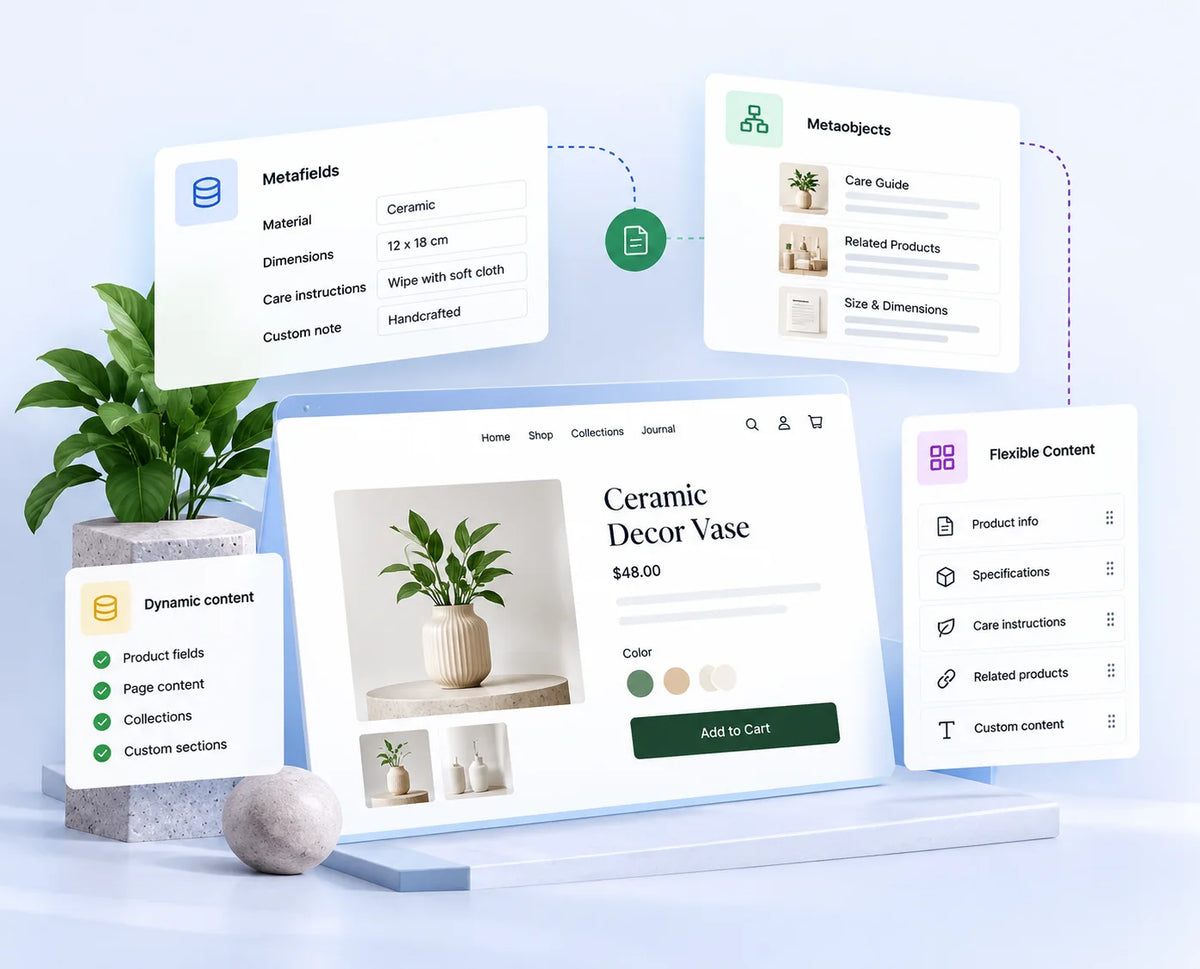
Metafields and Metaobjects for Flexible Content

Shopify metafields and metaobjects let a store hold structured, reusable content beyond standard product and page fields, useful for things like custom product specifications, size guides, or content that needs to appear consistently across multiple pages. Where a project calls for more flexible, merchant-managed content than Shopify's default fields support, we build using metafields and metaobjects rather than hardcoding content that your team would otherwise need a developer to update.

Performance and Accessibility in Theme Development

Theme code affects more than appearance. As part of development, we consider:
Unnecessary code and asset loading
Since a heavier theme generally loads slower.
Image handling
Sizing and formatting images appropriately rather than relying on oversized files.
Semantic HTML and keyboard accessibility
So the storefront works reasonably well for assistive technology and keyboard navigation, not just mouse and touch.
Readability and responsive behavior
Across screen sizes.

Testing Before Launch

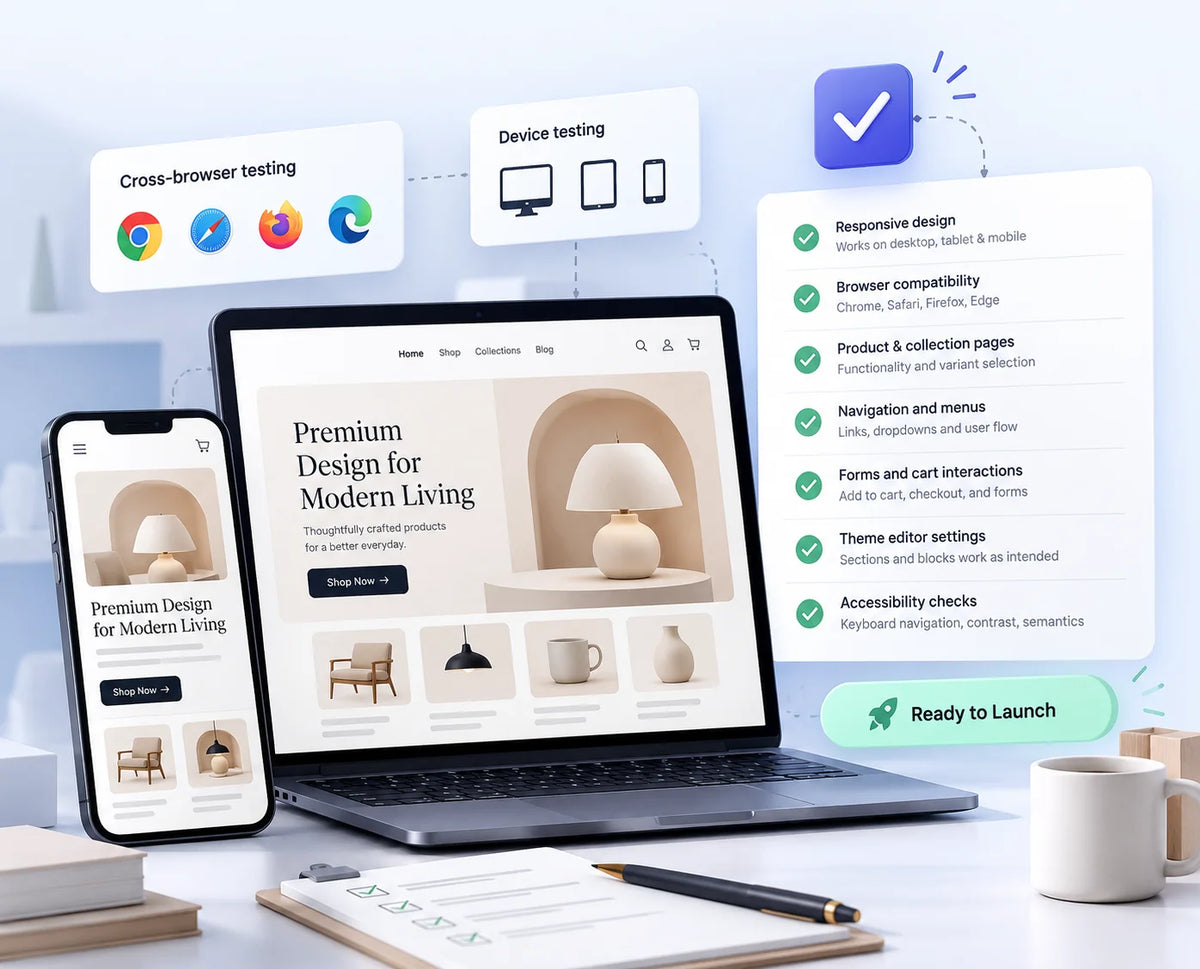
Before a new or customized theme goes live, we check:

  • Desktop and mobile responsiveness across common devices.
  • Browser compatibility.
  • Product and collection page functionality, including variant selection.
  • Navigation and menus.
  • Forms and cart interactions.
  • Theme editor settings, confirming merchants can actually use the sections and blocks as intended.
  • General accessibility checks.

Testing reduces the chance of launch-day issues, but it doesn't eliminate every possible edge case, particularly ones that only surface with real customer traffic. That's why we recommend a follow-up review shortly after launch.

Shopify Merchants We Support

We've built and customized Shopify themes for growing and enterprise Shopify merchants across D2C, B2B, and wholesale, working from existing brand guidelines or design files to match each store's specific requirements.

The CodeVibez Track Record

1,000+ Shopify Stores Supported
across D2C, B2B, and Wholesale merchants.
500+Five-Star Reviews
verified across Shopify, Google, and Trustpilot.
Shopify Certified Partner
with recognized Shopify Plus Partner status.
All reviews
5.0 (556)
551
5
0
0
0

Ready to Get Started?

Discuss Your Theme Project
Tell us whether you're starting from a design file, customizing an existing theme, or planning a full rebuild, and we'll outline the right approach.
Schedule a Call With Our Team
Walk through your current theme or design direction with a Shopify developer directly.

FAQs

Shopify theme development is the work of building or customizing the templates, sections, and code that control how a Shopify store looks and functions for visitors, ranging from small layout adjustments to a fully custom theme built from scratch.

Customization works within an existing theme's structure to change layout, styling, or specific elements. Custom development builds a new theme from the ground up, used when an existing theme's architecture can't reasonably support what a business needs.

Yes. Most theme requests, layout changes, new sections, styling updates, product and collection page adjustments, can be handled through customization rather than a full rebuild.

Cost depends heavily on scope: a customization project is generally far less involved than a fully custom theme built from a design file. We provide a specific estimate once we understand your requirements.

Timelines vary based on whether the project is a customization or a full custom build, and how much custom functionality (sections, metafields, product page logic) is involved.

Online Store 2.0 is Shopify's current theme architecture, built around JSON templates, sections, and blocks that let merchants add, remove, and rearrange page content through the theme editor without needing a developer for every change.

Not necessarily. Shopify Plus doesn't require a custom theme by itself; the decision depends on your specific design and functionality requirements, the same as for any Shopify store.

Metafields and metaobjects hold structured, reusable content beyond standard product and page fields, useful for custom specifications or content that needs to stay consistent and merchant-editable across multiple pages.

Existing brand guidelines, a design file if you have one, and a general list of pages or functionality you want addressed all help speed up planning, though none of this is required to start the conversation.